How To Replace Degrading Batteries In Smart Rings?
Smart rings track your sleep, heart rate, steps, and stress levels. They sit on your finger day and night. But after a year or two, you might notice something frustrating.
Your ring barely holds a charge. It dies in a single day. The battery is degrading, and you start asking the obvious question: can you replace it?
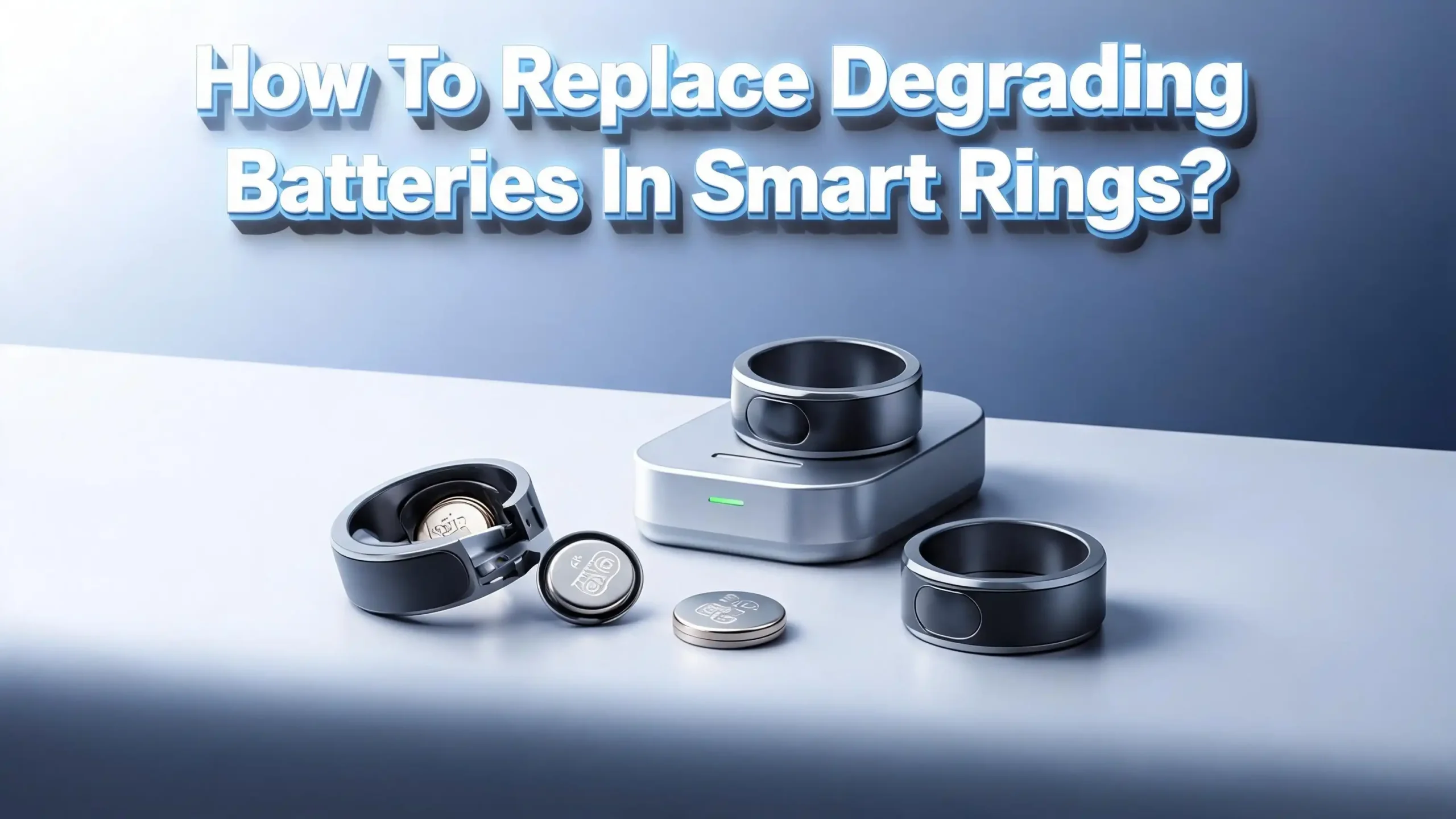
The honest answer surprises most people. Smart rings are sealed, tiny, and packed with sensors. The battery sits glued inside a waterproof shell. So replacing it is harder than swapping a phone battery. Still, you have real options. Some are official. Some are creative. A few involve professional help.
This guide walks you through every path. You will learn how to spot a dying battery, what each brand offers, and how to handle the situation without losing your data or your money. Let’s get into it.
Key Takeaways
- Most smart rings have sealed, non removable batteries. Brands like Oura, Ultrahuman, RingConn, and Samsung Galaxy Ring do not let you swap the cell. The ring is glued shut for waterproofing.
- Warranty replacement is your best first move. Oura, Samsung, and Ultrahuman often send a new or refurbished ring if the battery fails within the warranty window. This usually covers one to two years.
- DIY battery replacement is possible but risky. You can cut the ring open, replace the lithium polymer cell, and reseal it. You will likely lose waterproofing and void the warranty.
- Professional micro electronics repair shops can help. Some specialists work on wearables and can replace tiny batteries for a fee. Quality varies a lot.
- Good charging habits double your battery lifespan. Keeping charge between 20 and 80 percent, avoiding heat, and updating firmware all slow degradation.
- Trade in and upgrade programs exist. Some brands offer discounts when you return your old ring for a new one.
Why Smart Ring Batteries Degrade Over Time
Smart rings use lithium polymer batteries. These cells are tiny, often under 20 mAh. They charge and discharge every few days. Each full cycle wears the chemistry down a little. After 300 to 500 cycles, capacity drops noticeably.
Heat is the second big factor. Wearing your ring in a hot shower, a sauna, or under direct sun speeds up degradation. Charging the ring on a warm surface does the same thing. Lithium batteries hate heat more than they hate cold.
Software updates also play a role. New features like continuous SpO2 tracking or stress monitoring use more power. Your battery now drains faster, even though the cell itself is fine. Many Oura users reported sudden battery drops after firmware updates in 2024 and 2025.
A typical smart ring battery lasts 16 to 24 months before the user feels the drop. Some last longer with good care. Others fail in under a year. The signs are clear once you know them. Charge time gets longer. Daily wear time drops from five days to two, then to one. Eventually the ring shuts off mid day even when fully charged the night before.
Knowing why this happens helps you pick the right fix. A battery worn out from age needs replacement. A battery drained by software might just need a settings change.
How To Confirm Your Smart Ring Battery Is Actually Dying
Before you tear apart your ring or contact support, run a few quick checks. A surprising number of “battery problems” turn out to be software bugs or charger issues.
Start with the charging dock. Wipe the contacts with a dry microfiber cloth. Reseat the ring firmly. A loose or dirty connection mimics battery failure perfectly. Try a different USB power source too. Some chargers deliver weak current.
Next, open your companion app and check the battery health screen. Oura, Ultrahuman, and RingConn all show estimated battery percentage and recent drain history. Look for sudden cliffs in the charge curve. A healthy battery loses charge in a smooth line. A failing one drops in steep steps.
Run a soft reset. Place the ring on the charger for two hours. Then restart your phone, force close the app, and reopen it. This clears most software glitches.
If the ring still drains in under 24 hours after a full charge, the battery is likely degraded. Note the exact dates and percentages. You will need this evidence for warranty claims. Take screenshots of the battery graph too.
Pros of checking first: Saves you from unneeded repairs. Catches software issues quickly. Builds a clear record for support.
Cons of checking first: Adds a few days of delay. Sometimes the answer is still bad news.
Check Your Warranty Status First
Your warranty is the cheapest and safest path to a working ring. Oura offers a one year limited warranty on new rings. They also sell an extended protection plan that covers battery issues for up to three years. Samsung Galaxy Ring includes a one year warranty with battery coverage. Ultrahuman and RingConn offer similar one to two year terms.
Find your purchase date. Check your email for the order receipt. Log into the brand’s app or website and look at the device registration page. Many brands tie warranty to the original buyer, so secondhand rings often have no coverage.
Read the warranty terms carefully. Most policies cover defects but exclude “normal wear.” Battery degradation sits in a gray zone. Some companies treat it as a defect when capacity drops fast. Others call it expected wear after 12 months.
Contact support through the official app or website chat. Be polite but firm. Share your battery screenshots and charge history. Ask directly: “Will you replace my ring under warranty due to battery failure?” Many users get a yes, especially within the first 18 months.
Pros of warranty replacement: Free or low cost. Fast turnaround, often under two weeks. New or refurbished ring with full function.
Cons of warranty replacement: Limited time window. Replacement ring may be refurbished. Warranty does not always reset on the new ring.
How The Oura Ring Battery Replacement Process Works
Oura is the most common smart ring, so its process is well documented. Oura does not replace the battery alone. Instead, they send you a whole new or refurbished ring.
Start a chat through the Oura app or the Oura support site. The agent will ask you to run an automatic battery test. This sends diagnostic data straight from your ring. If the test confirms degradation, they offer a replacement.
You ship your old ring back in a prepaid envelope. The new ring arrives in about 7 to 14 days. Your account, sleep history, and settings sync automatically once you pair the new ring. You do not lose your data. All scores and trends stay in the app.
If your warranty has expired, Oura sometimes offers a discount on a new ring instead of free replacement. The discount usually ranges from 30 to 50 percent off the current model. It is not guaranteed but worth asking about.
Keep in mind that the replacement ring inherits the original warranty timeline. So if your first ring was 10 months old, your new one only has 2 months of coverage left. Consider the extended plan if you plan to keep the ring long term.
Pros of Oura’s process: Smooth and well tested. Data transfers easily. Often free within warranty.
Cons of Oura’s process: No real battery only repair. Refurbished rings have visible wear sometimes. Warranty does not extend.
Samsung Galaxy Ring And Other Brand Replacement Paths
Samsung handles Galaxy Ring battery problems through its standard repair network. You can book a repair through Samsung Members, mail the ring to a service center, or visit a Samsung store. The technicians do not actually fix the battery. They replace the entire ring and rebuild your old one for someone else later.
Ultrahuman ships replacement rings from its support team after a battery diagnostic. Users report mixed experiences. Some get fast service. Others wait weeks or fight to get approval. Document every chat and email in case you need to escalate.
RingConn handles cases case by case. They often ask for a video showing the rapid drain. Approval rates are decent within the first year. After that, you may pay a partial fee.
Circular, Movano Evie, and smaller brands have less established processes. Some only offer store credit. Others ignore battery requests entirely. Check user forums before buying any small brand ring if long term battery support matters to you.
Pros of brand repair networks: Backed by the manufacturer. Genuine parts. Data continuity through the app.
Cons of brand repair networks: Slow for non Oura brands. Inconsistent service quality. Out of warranty costs can match a new ring.
DIY Battery Replacement: Is It Possible?
Yes, but only if you have steady hands, the right tools, and patience. Smart rings are glued shut for waterproofing. There is no screw, no door, no clip. You must physically open the shell.
The tools you need include a precision rotary tool with a thin cutting disc, a small heat gun, plastic spudgers, a fine soldering iron, replacement lithium polymer cells in the right size, and waterproof epoxy. You also need a magnifying lamp or microscope. The components inside are millimeter scale.
The general process: warm the ring gently to soften the glue, score the seam with the cutting tool, pry the shell open with plastic tools, desolder the old battery, solder the new one in with matching polarity, and reseal the shell with epoxy. Each step takes time. One slip damages the sensors or the antenna.
Some hobbyists on YouTube and Reddit have done it successfully. Most failed attempts result in a dead ring or a ring that no longer survives water. Source the replacement battery from a trusted electronics supplier. Match voltage, capacity, and physical size exactly.
Pros of DIY replacement: Cheap if it works, often under 20 dollars in parts. Keeps your original ring. Satisfying if you enjoy electronics.
Cons of DIY replacement: High failure rate. Voids any warranty. Loses waterproof rating. Risk of battery puncture and fire.
Step By Step DIY Replacement Guide For Confident Users
If you decide to try a DIY repair, follow these steps in order. Work on a clean, well lit table. Wear safety glasses. Keep a fire safe surface nearby in case the battery vents.
First, fully discharge the ring before opening it. A flat battery is safer to handle. Mark the orientation of the ring with a small dot of paint so you can reassemble it the same way.
Second, warm the ring with a hair dryer for about 30 seconds. The adhesive softens at low heat. Do not use a heat gun on full power. Excess heat damages sensors.
Third, find the seam. Most rings have a thin line where the inner shell meets the outer shell. Score it gently with a fiberglass cutting wheel. Go slow. Stop the moment you see the inner layer.
Fourth, pry the shell open with a plastic spudger. Lift evenly around the ring. The battery sits next to the main board. Note the polarity of the two solder pads.
Fifth, desolder the old battery using a fine tip iron at around 320 degrees Celsius. Lift the cell out with tweezers. Solder the new battery in with the same polarity. Use minimal flux.
Sixth, test the ring before sealing. Place it on the charger and verify it powers on and pairs with the app. If it works, apply waterproof epoxy along the seam. Press the shell closed and let it cure for 24 hours.
Professional Micro Repair Shops And Third Party Services
If DIY scares you and your warranty has expired, look for independent micro electronics repair shops. These specialists work on hearing aids, fitness trackers, drones, and yes, smart rings. They have the magnification, soldering stations, and replacement cells you lack.
Search for “wearable repair” or “fitness tracker battery replacement” in your city. Read reviews carefully. Ask whether they have replaced smart ring batteries before. A shop that fixes phones is not always equipped for ring sized work.
Expect to pay between 60 and 150 dollars for the service. The price reflects the time and skill needed. Some shops in larger cities specialize in Oura and Ultrahuman rings. Others offer mail in service across countries.
Get a written quote before they start. Ask about waterproof resealing. A good shop uses pressure tested epoxy and may offer a 30 day repair warranty. Always back up your app data before shipping the ring.
Pros of professional repair: Higher success rate than DIY. Better tools and parts. Some warranty on the work.
Cons of professional repair: Expensive relative to a new ring. Hard to find qualified technicians. Mail in service adds wait time.
When To Replace The Whole Ring Instead Of The Battery
Sometimes a new ring just makes more sense. If your current ring is more than two years old, the sensors, Bluetooth chip, and software support are all aging together. A fresh battery will not bring back missing features.
Compare the cost of repair to a new ring. If a professional charges 120 dollars and a new ring costs 300, repair makes sense. If the repair is 200 and a refurbished ring direct from the brand is 220, replace it. Math wins.
Check if the brand has released a major hardware update. The Oura Ring 4, Galaxy Ring, and Ultrahuman Ring Air all added significant sensor and battery improvements over their predecessors. Sticking with old hardware just to save money sometimes costs you accuracy.
Also consider data continuity. Most apps move your full history to the new ring automatically. Years of sleep data follow you. You do not start over.
Pros of full replacement: New warranty, new battery, latest features. No repair risk. Often the best long term value.
Cons of full replacement: Higher upfront cost. Old ring goes to waste unless you trade it in. Recycling smart rings is still hard.
How To Extend Your New Battery’s Life
Once you have a working battery again, treat it kindly. Good habits stretch lifespan from 18 months to over three years. The rules are simple and backed by lithium chemistry research.
Charge the ring between 20 and 80 percent when possible. Avoid full drains and full charges every cycle. Top ups are healthier than full cycles. Most rings finish a top up in under 30 minutes anyway.
Keep heat away from the ring. Take it off in the sauna, hot tub, and during long sun exposure. Charge it on a cool surface, never on top of a laptop or phone. Heat is the silent battery killer.
Update the firmware promptly but read patch notes first. Some updates fix battery bugs. A few have caused them. If a new firmware version triggers heavy drain, downgrade if the brand allows it or wait for the next patch.
Turn off features you do not use. Continuous SpO2, stress tracking, and high resolution heart rate all consume more power. Disabling one or two unused features can add a full day of life per charge.
Clean the charging contacts weekly with a dry cloth. A clean connection charges efficiently. Dirty contacts force the ring to draw more current and produce heat.
Avoiding Common Mistakes During Battery Replacement
People make the same mistakes again and again. Avoiding them saves you money and frustration. Here are the most common ones to watch for.
Do not buy generic replacement batteries from unknown sellers. Counterfeit lithium cells are a real fire risk. Stick to recognized electronics suppliers and verify cell specifications match your ring exactly.
Never charge a ring you suspect is damaged. A swollen, hot, or hissing battery is a fire hazard. Place it in a metal container outside and contact local recycling for safe disposal. Lithium fires are fast and intense.
Do not skip the data backup. Even though most apps sync to the cloud, occasional sync failures happen. Export your data manually before sending the ring back or opening it. Oura, Ultrahuman, and Samsung Health all offer data export tools.
Avoid pressuring support agents with anger. Polite, factual messages with screenshots get faster results. Mention specific battery percentages, dates, and firmware versions. Treat the agent as your ally, not your enemy.
Do not ignore early signs. A ring that drops from five day life to three day life is already on the path. Address it now while you still have warranty time. Waiting only narrows your options.
Frequently Asked Questions
Can I replace the battery in my Oura Ring myself?
You can try, but Oura does not support DIY replacement. The ring is sealed for waterproofing. Opening it voids the warranty and almost always breaks the water resistance. Most users contact Oura support and receive a replacement ring instead.
How long does a typical smart ring battery last before it needs replacement?
Most smart ring batteries hold strong performance for 16 to 24 months. After that, capacity drops noticeably. Heavy users or those who charge daily may see degradation in 12 months. Light users with good charging habits sometimes reach three years.
Is DIY smart ring battery replacement safe?
It can be done safely with the right tools and skills, but the risk is real. Lithium cells can catch fire if punctured. The work requires precision soldering and waterproof resealing. Most casual users should not attempt it.
Will I lose my data if I replace my smart ring?
No. All major brands store your data in the cloud and on your phone. When you pair a new ring, your full history syncs automatically. Sleep scores, readiness trends, and activity logs all stay intact.
How much does professional smart ring battery replacement cost?
Independent micro electronics shops charge between 60 and 150 dollars for the service. The cost includes opening the ring, replacing the cell, and resealing the shell. Always confirm the shop has experience with your specific brand before paying.
What signs tell me my smart ring battery is dying?
Watch for sudden charge drops, longer charging times, daily wear time falling below 24 hours, and the ring shutting off unexpectedly. The battery graph in the app shows steep cliffs instead of smooth lines when the cell is failing.
Does charging my smart ring overnight damage the battery?
Modern smart rings stop drawing power once full, so overnight charging is mostly safe. Still, leaving it on the charger for many hours in a warm room adds wear. Charge during the day when you can unplug it sooner for the longest battery life.

Hi, I’m Lusi. I’m a tech enthusiast who loves digging into gadgets, testing products, and helping people find the best tech for their needs and budget. Got a question or a product you’d like me to review? Drop me a mail— I’d love to hear from you!